Table of Contents
ToggleThe Xbox 360 Arcade arrived in 2010 as Microsoft’s answer to players wanting an affordable entry point into the 360 ecosystem. Without the hard drive of its bigger siblings, this stripped-down model proved that you didn’t need every bell and whistle to have a genuinely great time gaming. Nearly two decades later, the Arcade still commands attention from retro collectors, nostalgic gamers, and anyone looking to relive the golden age of mid-2000s gaming. If you’re curious about what made this compact console tick, or whether one’s worth hunting down in 2026, this guide covers everything you need to know.
Key Takeaways
- The Xbox 360 Arcade offers an affordable, entry-level way to access the extensive 360 game library with identical performance to more expensive variants, making it a solid value for retro collectors today.
- Without a built-in hard drive, the Arcade strips down storage to 512MB of flash memory, but this limitation can be solved with a cheap USB external drive for full compatibility with installation-heavy titles.
- The console’s triple-core Xenon processor and Xenos GPU deliver the same frame rates and graphics quality as S and E models, with no performance penalties on AAA titles like Halo, Gears of War, or Call of Duty.
- Red Ring of Death and DVD drive failures remain the most common issues on aging Arcades; potential buyers should power-test units immediately and inspect disc drives before purchasing.
- When buying a used Xbox 360 Arcade in 2026, expect prices between $60–150 depending on condition and included games, with Facebook Marketplace and eBay offering the most selection for local or verified purchases.
- The Xbox 360 Arcade’s legacy lies in proving that affordability and game library access matter more than cutting-edge specifications, a philosophy that shaped future Xbox console strategies and remains appealing to nostalgic gamers today.
What Is The Xbox 360 Arcade?
The Xbox 360 Arcade was the lightweight variant of Microsoft’s second-generation console, released as a direct competitor to the PS3’s Slim model during the late lifecycle of the 360 generation. While earlier Xbox 360 models came with either a 20GB or 60GB hard drive, the Arcade stripped that down to zero, games either played from disc or streamed through cloud saves, depending on the title.
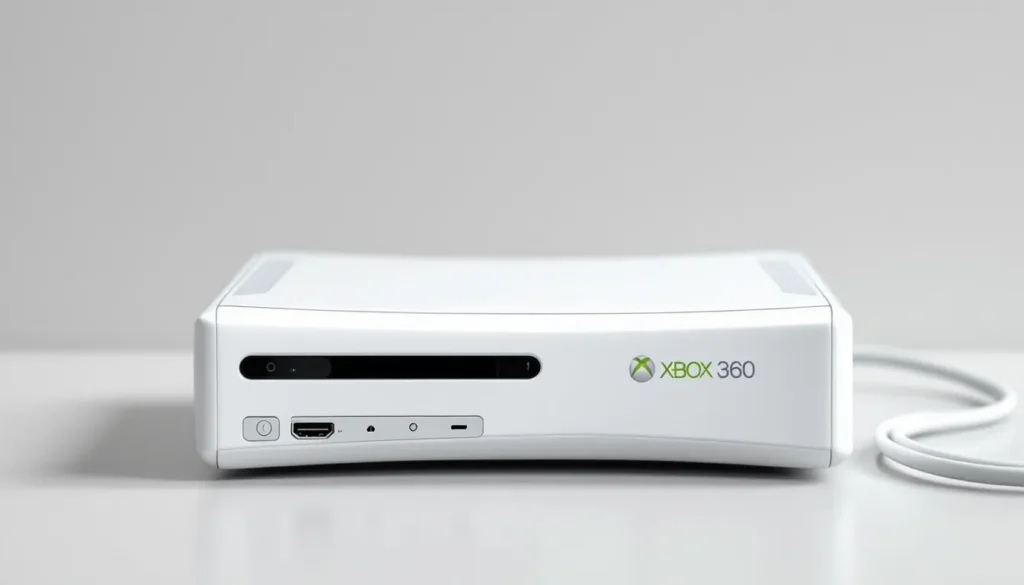
This made the Arcade the cheapest way to access the massive 360 library at launch. It shipped with a standard controller, HDMI cable, and enough internal flash memory (512MB) to handle achievements and small game updates. The white chassis became iconic, though it attracted dust like a magnet. Casual players loved it. Competitive players? They mostly stuck with the 360 S and E models that came later, which actually included better specs.
What really mattered was the game library behind it. The Arcade unlocked access to Halo 3, Gears of War, Call of Duty: Modern Warfare 2, and hundreds of other AAA titles that defined a generation. For pure gameplay, the lack of storage didn’t hurt, as long as you had disc copies or reliable internet.
Key Specifications And Hardware
Processor And Performance
The Xbox 360 Arcade ran on a triple-core Xenon CPU clocked at 3.2GHz, paired with an Xenos GPU capable of 240 GFLOPS. In plain terms: it could handle complex physics, detailed textures, and smooth framerates across its entire library, though you’d rarely see 60fps on AAA titles. Most games targeted 30fps, which was standard for that era.
The processor was the same across all 360 variants, so the Arcade had no performance deficit compared to the S or E models. Games didn’t run slower because you chose the Arcade. They ran identical to any other 360.
Audio processing also benefited from the Xenon’s architecture. Dolby Digital 5.1 surround sound was standard on supported titles, making everything from Bioshock to Left 4 Dead immersive as hell if you had the right home theater setup. No shortcuts there either.
Storage And Memory
This is where the Arcade made its most obvious compromise. Instead of a 20GB or 60GB hard drive, you got 512MB of internal flash memory. That was enough to save game progress, store achievement data, and handle tiny updates, but installing large games? Forget about it.
Some titles required a hard drive or external USB drive to function properly. Final Fantasy XI, Lost Odyssey, and a handful of others weren’t playable on the Arcade without workarounds. Most modern Xbox 360 collectors have picked up a cheap 250GB external drive to work around this limitation.
Network speed was standard 802.11n Wi-Fi, which was solid for its time. Ethernet wasn’t built-in, but a USB adapter solved that if you needed a wired connection for online play. Multiplayer performance on the Arcade was identical to other 360s once connected.
The Best Games For Xbox 360 Arcade
Exclusive Arcade Titles
The Xbox 360 Arcade excelled with games that didn’t require installation. Arcade games, small downloadable titles sold through Xbox Live, were perfect. Titles like Geometry Wars Evolved 2, Doom, Galaga Legions, and Pac-Man Championship Edition provided hours of addictive gameplay without touching that tiny hard drive.
Castle Crashers was another standout. This 2-4 player beat-’em-up became a cultural touchstone, and it played flawlessly on the Arcade. Banjo-Kazooie: Nuts & Bolts (exclusive to 360) offered quirky platforming mixed with vehicle customization that nobody had quite done before. Shadow Complex brought Metroidvania sensibilities to a modern action lens, and it ran beautifully without installation.
These weren’t afterthoughts. Arcade-exclusive content and downloadable games often punched above their weight, showing that raw power mattered less than creative design.
Popular AAA Games
The real draw was access to the AAA lineup. Halo 3, Halo: Reach, and Halo 4 defined the Arcade’s first-person experience. Gears of War 1-3 set the standard for cover-based third-person shooters. These played identically on Arcade, S, and E models, no performance asterisks.
Call of Duty: Modern Warfare 2 and Black Ops became esports juggernauts on the 360. Both ran butter-smooth on the Arcade, which says everything about how well optimized these games were. Fallout 3 and The Elder Scrolls IV: Oblivion offered 100+ hours of RPG goodness.
Grand Theft Auto IV and Rockstar’s Red Dead Redemption proved that open worlds weren’t an excuse for lazy optimization. Both felt massive but ran solidly on the Arcade’s hardware. Sports franchises like FIFA, Madden, and NBA 2K used NBA 2K18 Xbox 360 to deliver annual updates that made sense on the older hardware.
The Exploring Iconic Xbox 360 Games available on this console represent some of the most influential titles ever shipped on any platform. Not every game on the 360 was great, but the hits were really good.
Maintaining Your Xbox 360 Arcade
Common Issues And Troubleshooting
The Xbox 360 Arcade faces the same notorious hardware issues as its siblings: the Red Ring of Death (RROD). This three-light error indicated overheating or a fundamental hardware fault, and it killed countless units. It’s 2026, and any Arcade you buy now has either survived years of use or been refurbished.
DVD drive failures are another common culprit. The drive would either refuse to read discs or suddenly eject them mid-game. If your Arcade exhibits this, replacement drive modules are available from third-party sellers, but installation requires opening the unit.
Controller connectivity issues pop up occasionally. Wireless controllers drift or desync after years of use. The simple fix: swap batteries or try reconnecting via the sync button on both the console and controller. If that fails, a USB-wired controller works universally across all 360 models.
Network connectivity problems usually stem from Wi-Fi interference or a failing motherboard component. Test your connection through the dashboard settings. Ethernet via USB adapter is more stable if wireless keeps dropping.
Sound cutting out mid-game? Check your HDMI cable first. A loose connection causes audio dropout faster than you’d think. If that’s not it, the motherboard might need professional repair.
Cleaning And Care Best Practices
Dust is the silent killer of aging consoles. The white Arcade chassis shows every speck, and more importantly, dust clogs the vents, forcing the CPU and GPU to run hotter. Every few months, use compressed air to blow out the vents. Aim the nozzle at a 45-degree angle and short bursts, don’t hold it down.
Internal cleaning requires opening the case, which voids any remaining warranty. If you’re comfortable with that, here’s the process: Remove the case clips, carefully slide off the faceplate, and use a soft brush to clean the heatsink fins. Thermal paste on the GPU/CPU doesn’t need replacement unless it’s visibly dried out (rare unless the unit is 15+ years old).
Keep the console in a well-ventilated area. Avoid enclosed cabinets or shelves where hot air gets trapped. At least 4 inches of clearance on all sides is ideal. Don’t stack other electronics on top of it.
Disc maintenance: scratches kill playback. Store discs vertically in cases, never stacked flat. If a disc gets scratched, some players swear by the toothpaste method (light rubbing with a microfiber cloth), but the safest bet is buying a replacement copy.
Controller batteries drain faster on older units. Keep spare AA batteries on hand or invest in a rechargeable battery pack. Original Xbox 360 play-and-charge kits are still available and worth the $20-30 investment.
Buying A Used Xbox 360 Arcade Today
How To Evaluate Condition And Price
A functioning Xbox 360 Arcade in 2026 runs $60-150 depending on condition, included games, and controller count. Prices vary by platform (Facebook Marketplace, eBay, local retro shops) and regional demand. Premium units with rare games command higher prices.
When evaluating a unit, power it on immediately. It should boot within 5 seconds and reach the dashboard without error codes. The Red Ring of Death is an immediate deal-breaker, walk away. Listen for loud fan noise. A quiet hum is normal: a high-pitched whine or roaring sound indicates fan wear.
Test the disc drive with a game you confirm works. Insert it, wait 3-5 seconds for it to recognize. If the drive spins, reads it, and launches the game, you’re solid. If it ejects after 10 seconds or refuses to recognize the disc, the drive is failing.
Check the ports. The USB ports should recognize a controller without lag. HDMI should output video and audio, plug it into a TV and watch the dashboard. Any graphical glitches (lines, corrupted text, freezing) suggest GPU failure.
Test all buttons on the included controller. Analog sticks should respond smoothly without dead zones. Try the bumpers, triggers, and D-pad. Any sticking or unresponsiveness means you’ll need a replacement controller ($25-40 for original Xbox 360 controllers today).
Ask about the console’s history. How long has the current owner had it? Has it been refurbished? Was it stored in a humid environment? These details matter more than you’d think.
Where To Find Authentic Units
Facebook Marketplace and Craigslist offer the most local options, but you’ll need patience sorting through listings. Verify photos show the actual unit you’re buying, not stock images. Always meet in a public place and test the console before handing over cash.
eBay guarantees some protection if a unit arrives dead. Filter for “Sold” listings in your region to understand realistic pricing. Beware of “untested” units, they’re often broken and sold as parts. Stick with “tested and working” from reputable sellers with high feedback scores.
GameStop and retro game shops sometimes stock used Arcade units, though they’re pricier (they handle the QA). You get peace of mind and a return window, which adds value if you’re buying unseen.
Specialized retro gaming retailers often refurbish consoles, replacing worn thermal paste, testing components, and resealing. They cost more upfront ($120-180), but you’re buying reliability and typically get a warranty. Understanding Xbox 360 Price Trends helps you spot fair deals versus overpriced units.
Don’t buy from unknown international sellers on AliExpress or wish. The risk of counterfeits or non-functional units is extremely high, and returns are a nightmare.
Xbox 360 Arcade Vs. Other Console Variants
Arcade Edition Advantages
The Arcade’s main advantage is affordability. It was the cheapest 360 variant when released, and used units today are still the most budget-friendly entry point. If you’re buying ten consoles for a retro LAN party, Arcade models won’t drain your wallet.
The white finish looks crisp and distinct. Many collectors prefer the Arcade’s minimal aesthetic compared to the matte black of the S model or the glossy red of special editions. It’s subjective, but the Arcade has its own charm.
Size and weight are identical across all 360 models (except the original fat models), so there’s no physical advantage. Arcade doesn’t run hotter or cooler than the S, thermals are the same.
You can always add storage externally. A USB hard drive ($15-25 used) solves any installation limitations, giving the Arcade feature parity with S and E models. It’s an extra expense, but it’s cheaper than buying a premium variant upfront.
Comparison With S And E Models
The Xbox 360 S (Slim) arrived in 2010, the same year as the Arcade. It included a 250GB hard drive, built-in Wi-Fi, and better heat management. If you’re buying today, the S is arguably the best value: the hard drive eliminates storage workarounds, and internal reliability is marginally better due to improved cooling.
The Xbox 360 E (released 2013) was a last-gen refresh with a sleeker black design, 500GB hard drive, and Wi-Fi. It’s rarer and commands higher prices, but the hardware is nearly identical to the S. The main difference is aesthetics and storage capacity.
Price-wise in 2026: Arcade units cost $60-100, S models run $80-140, and E models fetch $120-180. The S model represents the best middle ground, cheap enough to justify the purchase but equipped enough to avoid frustration.
Performance? All three run games at identical quality. There’s no FPS advantage to the S or E. The hard drive is the practical differentiator. If you’re playing disc-based games only and don’t mind occasional loading screens, an Arcade works fine. If you plan to install games or download titles, spring for the S.
Online multiplayer is identical across variants. A player on an Arcade faces no disadvantage against an S or E user in Halo 3 or Call of Duty. Connection speed depends on your internet, not the console.
Rarity affects pricing too. The Arcade is common, so you’ll find plenty. The E is rarer, especially in pristine condition. Collectors pay premiums for rare variants, but gamers should prioritize function over rarity.
The Legacy Of Xbox 360 Arcade
The Xbox 360 Arcade represents a pivotal moment in gaming history. By 2010, the console was in its twilight, but Microsoft proved that a low-barrier entry point could still move hardware and access an enormous game library. It democratized the 360 ecosystem in a way the original fat models never could.
Gamers remember the Arcade fondly because it delivered on the core promise: play great games affordably. No compromises on game selection, no performance penalties. Just solid hardware at an accessible price. That philosophy resonates in 2026, where nostalgia for the 360 era remains strong.
The Arcade also solidified Microsoft’s strategy of offering multiple SKUs. The company learned that not every player needs cutting-edge specs or maximum storage. Some just want access to the games. This lesson shaped the Xbox One S and All-Digital editions years later, proving the Arcade’s blueprint had staying power.
Competitively, the Arcade never dominated esports. Halo and Call of Duty tournaments mostly used later S models or purposefully matched hardware. But casual and semi-competitive players loved using Arcades for couch multiplayer and online ranking ladders. The Top Xbox 360 Co-Op Games selection was perfect for group play on any variant.
Today, the Arcade exists in gaming museums, retro streamers’ setups, and collectors’ shelves. Dedicated fans still play online (though the player base has shrunk dramatically). Emulation efforts have preserved the library, but nothing quite replicates the feeling of booting an actual Arcade unit and hearing that disc drive spin up.
The console’s legacy transcends hardware specs. It’s about accessibility, library depth, and a moment when gaming felt genuinely exciting. The Arcade stands as a testament to that era, not the most powerful, not the most technically impressive, but absolutely relevant to anyone who lived through the 2010s gaming landscape. Recent gaming analysis from GameSpot continues to celebrate the 360’s impact, and the Arcade remains a cornerstone of that discussion.
Conclusion
The Xbox 360 Arcade deserves its place in gaming history, even if it wasn’t the flashiest variant. It proved that Microsoft could deliver affordability without sacrificing game library access or performance. In 2026, hunting down a used Arcade unit makes sense if you’re chasing nostalgia, building a retro collection, or want to experience a defining era of gaming on original hardware.
Evaluate your needs honestly: Will disc-based gameplay suffice, or do you need installation capability? Are you willing to troubleshoot potential hardware issues, or should you invest in a refurbished unit? How much are you budgeting? Answer these questions, and you’ll find the right path forward.
The Arcade isn’t the ultimate 360 experience, the S or E models offer better long-term reliability and feature completeness. But it’s a fully capable machine that still delivers on everything that made the 360 era unforgettable. If the price is right and the condition checks out, it’s absolutely worth your money.