In the epic showdown of gaming consoles, the PlayStation 4 Slim and Pro stand like titans ready to duke it out. On one side, the Slim boasts a sleek design and a wallet-friendly price, perfect for casual gamers who want to dive into the PlayStation universe without breaking the bank. On the other, the Pro flexes its muscles with enhanced graphics and performance, ideal for those who crave immersive experiences and can’t resist the allure of 4K gaming.
Choosing between them is like picking between pizza and tacos—both are delicious, but your taste buds might lead you in different directions. Whether it’s the Slim’s compact charm or the Pro’s powerhouse capabilities, this battle is sure to spark debates among gamers. Buckle up as we explore the strengths and quirks of each console to help you decide which one deserves a spot in your gaming setup.
Overview of Playstation 4 Slim and Pro
The PlayStation 4 Slim and Pro cater to different gaming preferences and experiences. Slim features a sleek and compact design, optimized for casual gamers wanting a reliable console. Performance-wise, it supports Full HD gaming, delivering an enjoyable experience without demanding hardware.
In contrast, the Pro enhances gaming with its 4K graphics capabilities. This console targets enthusiasts seeking the best visual experience possible. It’s equipped with a more powerful GPU, allowing for smoother frame rates and improved load times in demanding games.
Storage options also differ between the two models. Slim typically comes with 500GB or 1TB hard drives, providing enough space for many games. The Pro offers similar storage options but benefits from faster read and write speeds, enhancing gameplay efficiency.
Both consoles support the same PlayStation 4 library, allowing gamers to access an extensive range of titles. However, titles optimized for the Pro showcase improved textures and visual effects, providing an immersive experience that truly stands out.
Online functionality remains consistent across both models, facilitating multiplayer interactions and digital downloads. Players can enjoy seamless online experiences, regardless of the console they choose.
Users considering an upgrade will find the Pro’s features compelling. It represents a significant improvement for those looking for next-gen performance while enjoying the existing PS4 game ecosystem. The choice boils down to budget and gaming priorities, emphasizing personal preferences in gaming setups.
Design and Build Quality
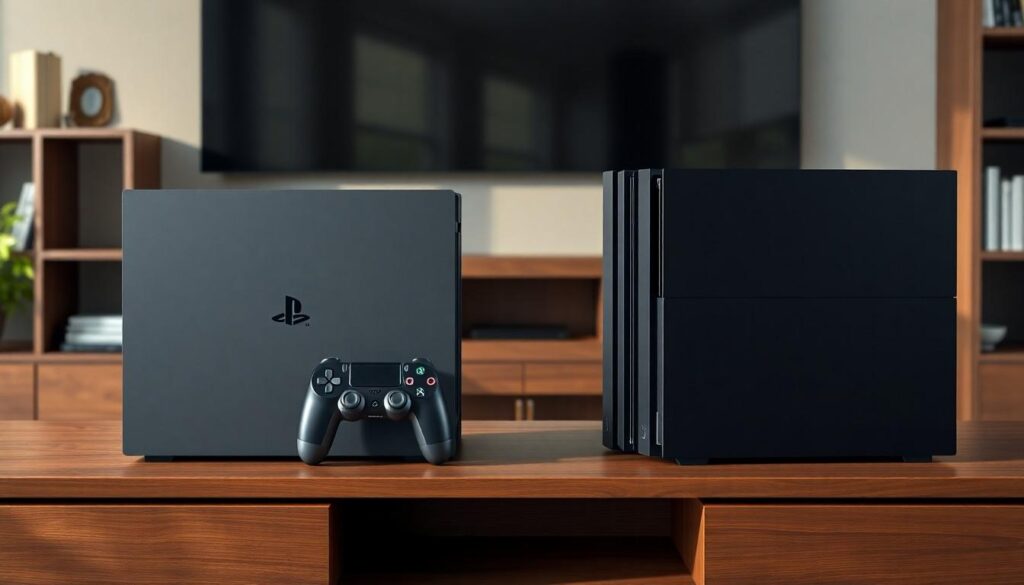
The PlayStation 4 Slim and Pro exhibit distinct design elements and build quality that appeal to different audiences.
Size and Weight Comparison
The Slim measures 10.4 x 11.3 x 1.5 inches and weighs 0.88 pounds. In contrast, the Pro is larger at 11.6 x 12.9 x 2.5 inches, with a weight of 1.6 pounds. While both consoles provide a compact footprint, the Slim is designed for portability. Users favor the Pro for its heft, which contributes to an enhanced cooling system. Both models fit comfortably in most entertainment setups but differ significantly in dimensions and weight.
Aesthetic Differences
The Slim features a minimalist design, characterized by smooth lines and a matte finish. It has a sleek and understated look. The Pro, on the other hand, adopts a more angular and bold appearance with its layered structure. A glossy finish on its top surface adds to its visual appeal. While the Slim might blend seamlessly with various décor styles, the Pro stands out as a statement piece. Overall, aesthetic preferences influence choices, impacting how each console fits into the gamer’s environment.
Performance and Specifications
Performance and specifications distinguish the PlayStation 4 Slim from the Pro. Each console targets different gaming experiences based on design and technical capabilities.
Processor and Graphics Differences
The Pro features a more powerful CPU and GPU, optimizing it for 4K gaming. This upgrade results in smoother frame rates and enhanced visuals, especially in demanding titles. The Slim, however, supports Full HD graphics, making it suitable for casual gaming. Performance in both versions remains efficient, but the Pro’s advanced hardware enhances immersion and detail. Gamers seeking the highest quality in visual experience find the Pro’s specifications more appealing.
Storage Options
Storage capacities vary between the Slim and Pro. The Slim typically offers 500GB or 1TB hard drives, accommodating a substantial number of games. The Pro mirrors these options but incorporates faster read and write speeds, which improve loading times significantly. Gamers benefit from the increased speed when playing large titles. Both consoles connect to the same extensive library, ensuring easy access to titles. Users focusing on performance and storage efficiency may prefer the Pro.
Gaming Experience
The gaming experience on the PlayStation 4 Slim and Pro significantly differs due to their advanced capabilities. Casual gamers appreciate the Slim’s reliable performance, while the Pro caters to enthusiasts seeking graphics that elevate gameplay.
Visual Quality and Frame Rates
Visual quality sets the Pro apart with its ability to render games in 4K resolution. Gamers enjoy enhanced details and vibrant colors with titles optimized for the Pro. Frame rates also improve, as the Pro’s GPU supports smoother gameplay, particularly in graphically intensive titles. The Slim, on the other hand, delivers a solid Full HD experience suited for enjoying a wide range of games. While it’s capable of decent graphics, the frame rates may not rival those achieved on the Pro in demanding scenarios.
Exclusive Games Compatibility
Both consoles support an extensive library of PlayStation 4 titles, but the Pro offers enhanced experiences for certain exclusive games. Its advanced features optimize graphics and performance, showcasing unique content that utilizes its higher specifications. Titles like “God of War” and “Horizon Zero Dawn” reveal improved textures and effects on the Pro. Casual gamers can still enjoy these games on the Slim, though the visual fidelity may not reach the same heights. Prioritizing exclusive compatibility gives Pro users an edge in immersive gaming experiences.
Price and Value
Price plays a crucial role in the decision-making process for gamers considering the PlayStation 4 Slim or Pro.
Cost Comparison
The Slim typically retails between $299 and $349, offering an appealing entry point for casual gamers focused on affordability. In contrast, the Pro ranges from $399 to $499, providing enhanced performance at a higher price point. While both consoles see occasional discounts, the Slim often attracts budget-conscious users during sales events. Price differences influence user choices based on gaming habits, with casual gamers gravitating towards the more economical Slim option. Enthusiasts aiming for premium experiences naturally choose the Pro for its superior features.
Overall Value Analysis
Value stems from what each console delivers concerning its price. The Slim offers solid performance and Full HD graphics, making it a dependable choice for everyday gaming. Gamers who enjoy casual play appreciate the well-rounded experience without overspending. The Pro stands out through its 4K capabilities and advanced processing power, appealing to users craving premium visuals. This higher investment provides enhanced gameplay experiences, particularly in graphically intensive titles. Ultimately, users evaluate what aspects are most meaningful to them, balancing cost against desired gaming performance.
Conclusion
Choosing between the PlayStation 4 Slim and Pro ultimately hinges on individual gaming preferences and budget considerations. The Slim offers a reliable and affordable option for casual gamers who appreciate solid performance without breaking the bank. Its sleek design and Full HD capabilities make it an attractive choice for those who enjoy gaming without the need for cutting-edge graphics.
On the other hand, the Pro caters to enthusiasts seeking an immersive experience with 4K visuals and enhanced performance. Its advanced hardware and superior graphics capabilities elevate gameplay in demanding titles. Both consoles provide access to the same extensive library of games, but the Pro delivers a more visually stunning experience. Ultimately, gamers must assess their priorities to determine which console aligns best with their gaming lifestyle.